If you are deciding
Nothing AI-drafted reaches a funder, an applicant or the public until one of your staff has put their name to each thing it guessed.
If you use it daily
The AI does the first draft. You see exactly what it read and what it assumed, and you settle those assumptions in a few clicks.
If you are doing diligence
One gateway for every model call; a manifest, extracted assumptions and a named owner per assumption on every artefact; the gate enforced server-side.
One gateway
Every AI call in the product goes through a single gateway. No screen, workflow or background job calls a model directly. That gateway is where the three things below are attached to the output, so they are present on every artefact, not only on the ones someone remembered to check.
What every AI-drafted artefact carries
- 1
A context manifest
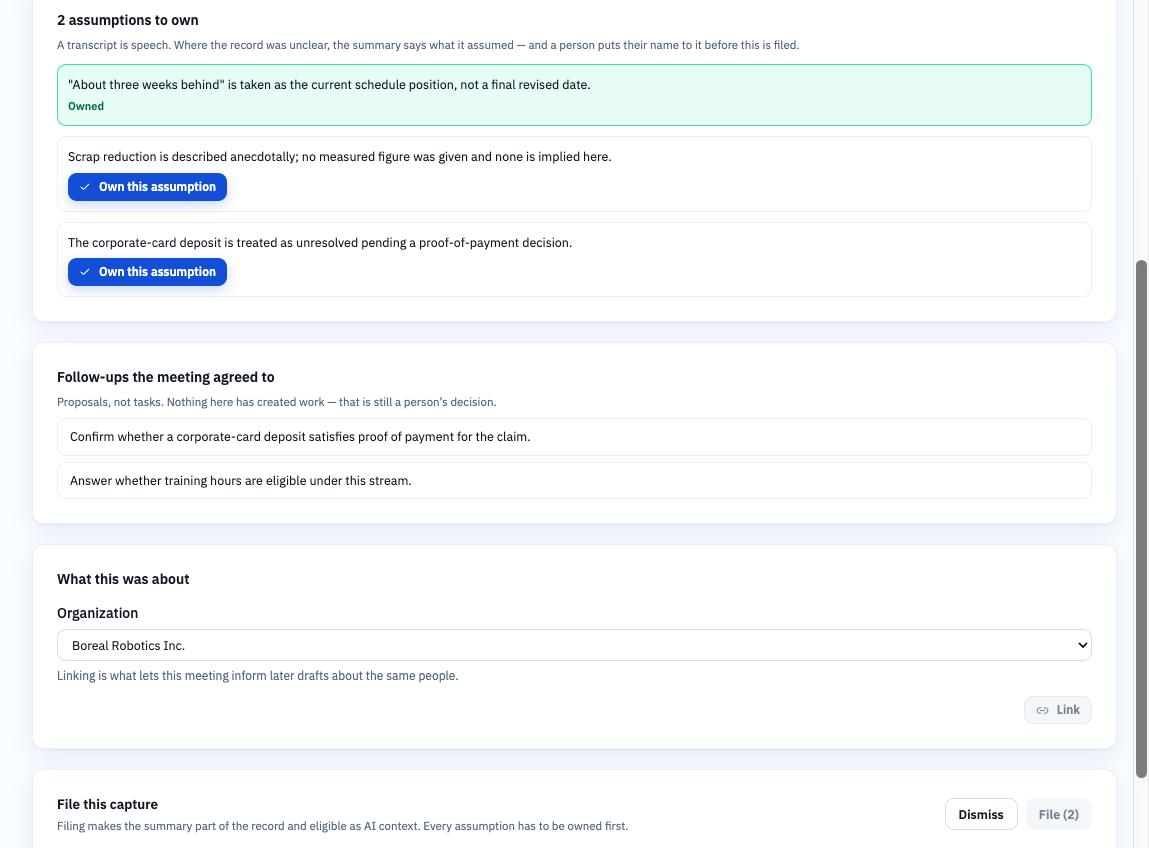
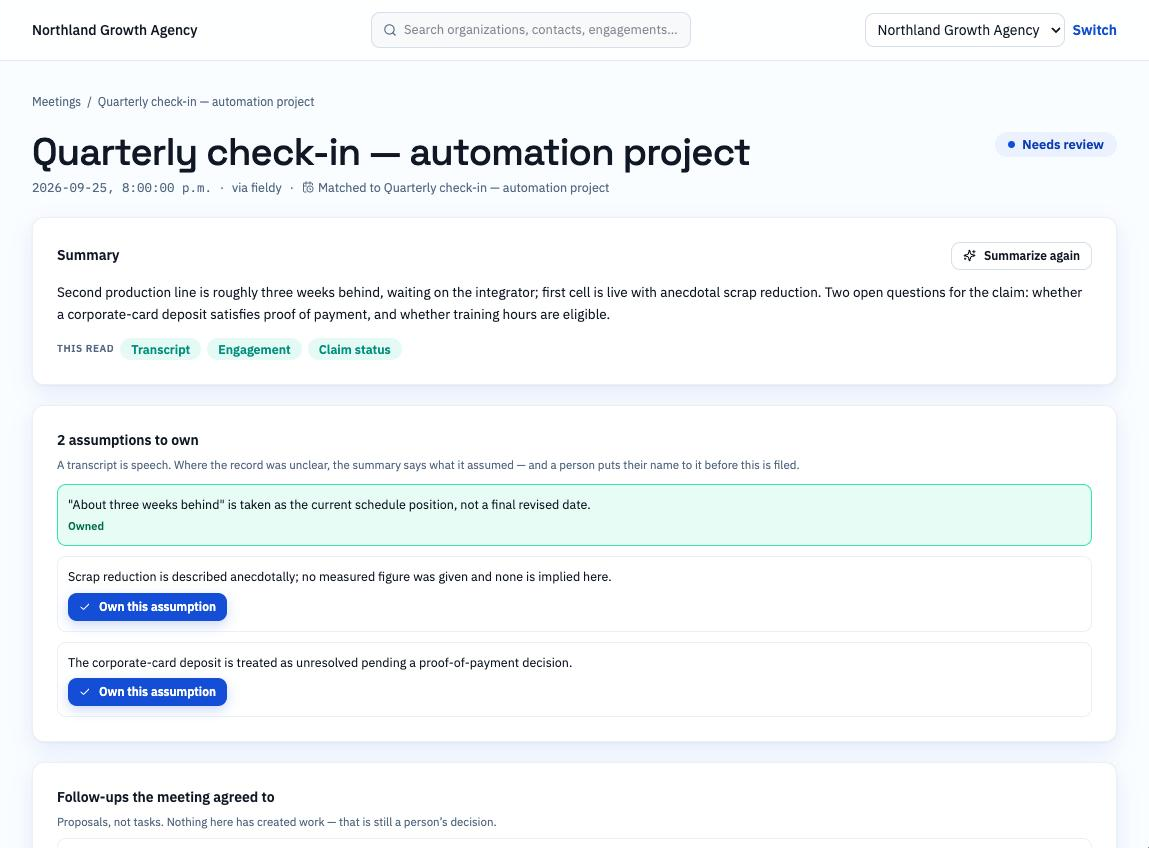
The exact records the model was given, shown as chips: “Transcript”, “Engagement”, “Claim status”. If it was not on the manifest, the model did not see it.
- 2
Extracted assumptions
Each thing the model had to guess, written as a plain sentence a program manager can agree or disagree with.
- 3
A named owner per assumption
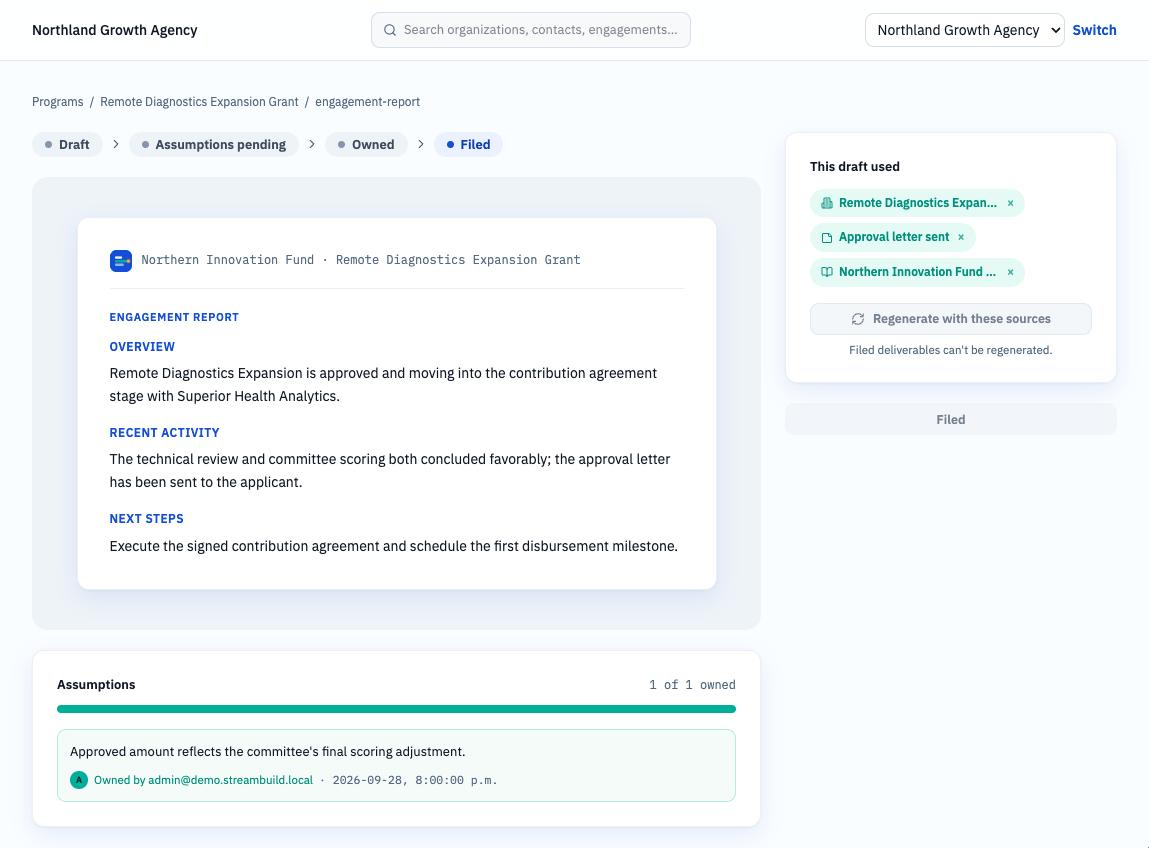
The person who accepted or corrected it, and when. An assumption nobody has accepted stays visibly unaccepted.
The gate
Output cannot be filed, sent or published while any assumption on it is unowned. That rule is checked by the server when the file, send or publish is requested, rather than by hiding a button. A screen that forgot to disable the button would still be refused.
Owning an assumption is an individual act. There is no “accept all”. Correcting one is a first-class choice: the person writes what is actually true, the draft updates, and the model’s original wording is kept in the record alongside the correction.
Model tiers, and the refusal
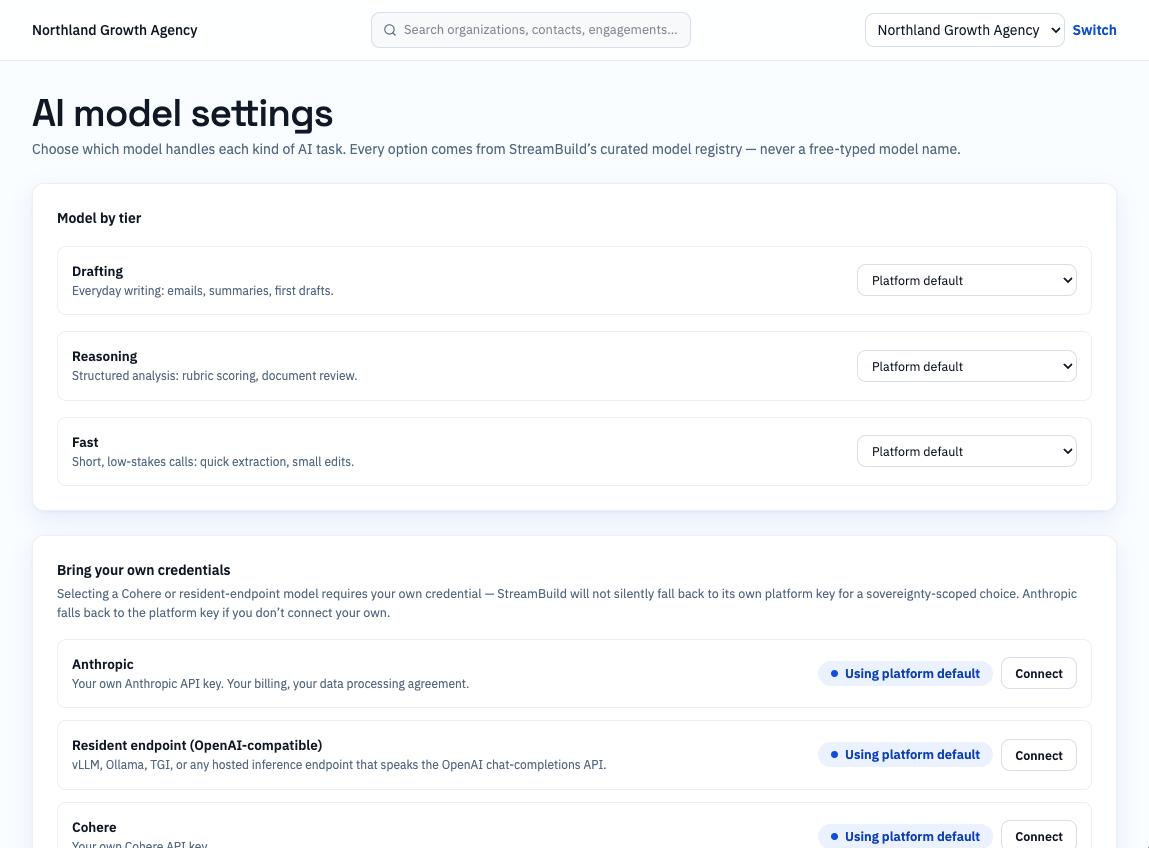
Models are arranged in tiers, with automatic fallback when a provider has a transient failure. An agency can scope a model to a particular data residency. A model scoped that way will refuse to fall back to the default, US-hosted model: the request fails, and the person is told to configure a credential for a model in the right region.
We would rather the draft fail than move your records across a border without you deciding to.
What this does not do
- The AI does not decide anything. It drafts; people own.
- There is no bulk acceptance of assumptions, and no keyboard shortcut that owns one.
- Residency is not automatic. The default model tier is US-hosted. Scoping a model to another region today means supplying your own endpoint. There is no first-party Canadian option yet. We are building that provider adapter, targeted for October 2026.
- The manifest shows which records the model was given. It does not show the model provider’s own processing.