If you are deciding
Any file can be picked up by anyone on the team, because its history, documents and correspondence are on the record rather than in someone’s inbox.
If you use it daily
Status, notes, files, deliverables and linked mail on one screen. The record is the working surface, not a report about it.
If you are doing diligence
Every entry on the record’s activity feed is read from the audit log written inside the same transaction as the change.
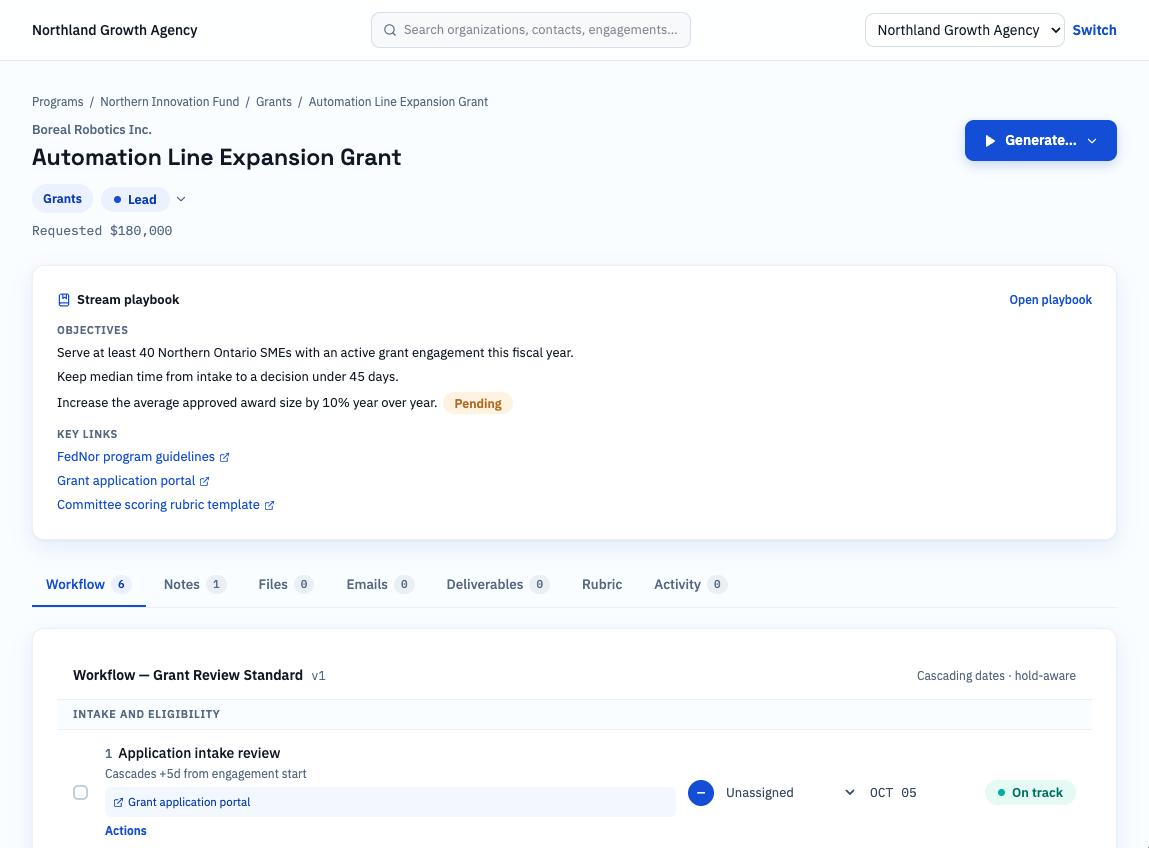
Anatomy of a record
- Status and stage
- Where the engagement is, in your stream’s own vocabulary. Changing either is a recorded change with your name on it.
- Notes
- Case notes written by staff. They are part of the record and can be given to the AI as context, and only if someone chooses to.
- Files
- Documents stored against the record they are evidence for: applications, budgets, signed agreements, receipts.
- Deliverables
- Documents the agency produces for this engagement. Each goes through the ownership gate before it can be filed.
- Correspondence
- Mail threads bonded to this organization and engagement. See Mail.
- Activity
- Every change to the record, who made it and when.
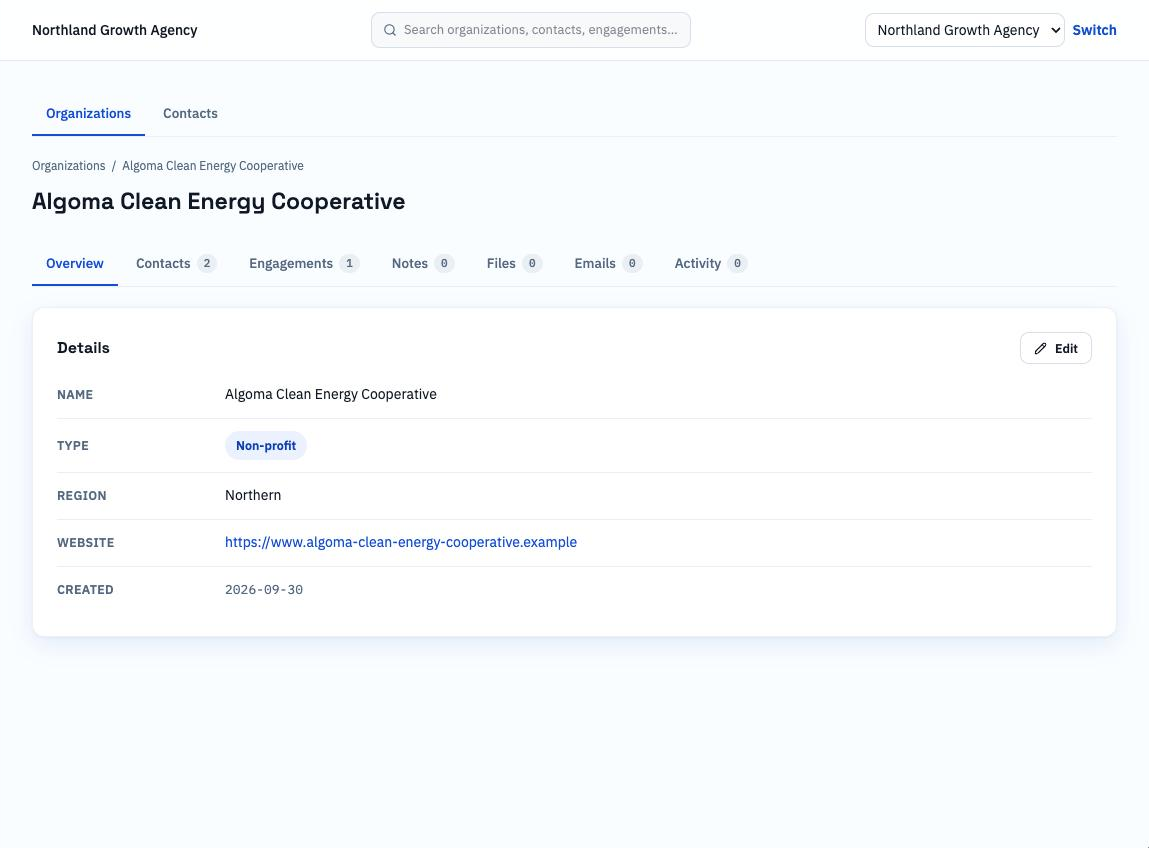
Organizations hold the relationship
An organization can have engagements in several streams at once, for example a grant in one program and advisory hours in another. The organization record gathers them, with the contacts and every thread that involved them, so the relationship is visible even when the work is split across teams.
What this does not do
- There is no generic project or task module. Tasks come from workflows attached to engagements, leads and events.
- Records cannot be bulk-edited across streams. Status changes are made per engagement so each one is attributable.
- Deleting a record does not remove its audit history.